


Formed
4.92.76K Reviews
App Specs
- Version
- 10.303.1
- Updated On
- License
- Free
- Downloads
- 100,000+
- Developer
- The Augustine Institute
- Categories
- Education
- Platform
- Android
Screenshots
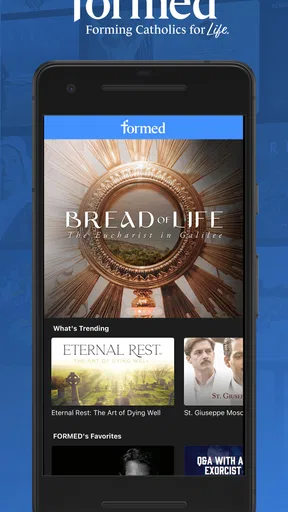
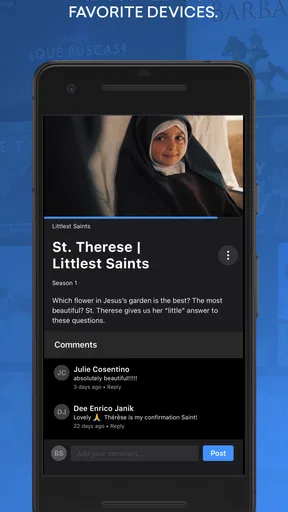
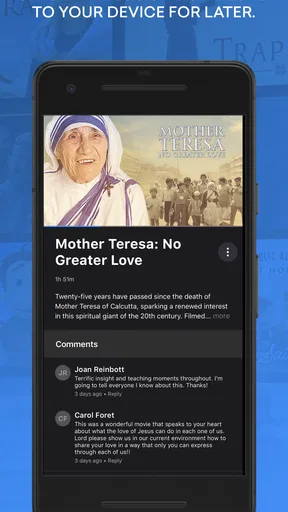


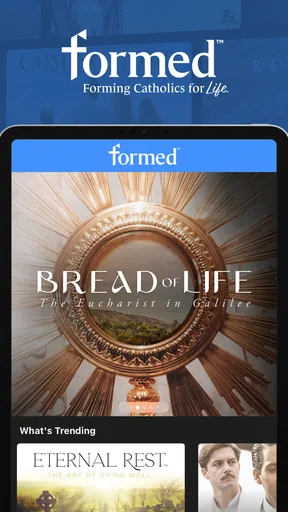
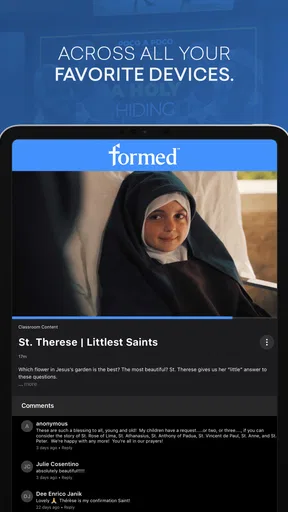
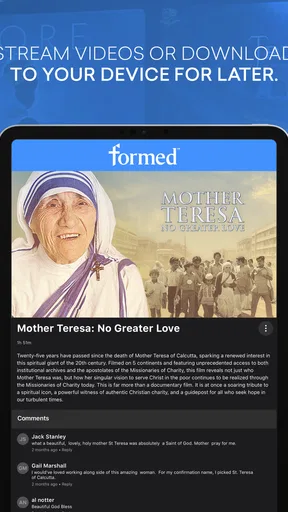
 Analysis by AppCompare
I approached Formed as an education app rather than another general video service, and that distinction matters. Its purpose is Catholic formation: giving people a way to learn, reflect, and build a more informed faith life through digital content. The central capability is not simply having religious material in one place; it is making that material available for regular personal use, whether I have a few quiet minutes or enough time for a deeper session.
That focus makes the app unusually easy to understand. It comes from The Augustine Institute, carries an Everyone content rating, and is free to install. The app has reached over 100 thousand installs, with a 4.9 average from around 6 thousand ratings and roughly 3 thousand written reviews. Those figures suggest that it has found a committed audience, but they do not remove the need to ask whether its approach fits the way you actually learn.
Formation works best when it becomes a habit
The strongest idea behind Formed is consistency. Catholic learning can easily become something I intend to do later: read a book, watch a lecture, understand a part of the Bible, or revisit a teaching. In practice, a resource becomes useful only when it is easy to return to. This app is most valuable when I treat it as a regular place for formation instead of opening it once, browsing for a while, and forgetting it.
That is the capability I would put at the center of the experience: turning Catholic education into an accessible routine. The app’s store summary describes its purpose as forming Catholics for life, and that long-term emphasis is more important than any single session. It suits someone who wants an ongoing learning path, not merely a quick answer to one religious question.
I also like that this is an education product with a clear identity. A broad podcast app or video platform may contain excellent Catholic material, but it also surrounds that material with unrelated recommendations and competing subjects. Formed starts from a narrower purpose. For a Catholic user, that can reduce the effort of deciding what to search for and help keep study connected to prayer, doctrine, Scripture, and everyday discipleship.
Why a focused Catholic app can be more useful than a general platform
On a general service, I would normally have to judge each creator, search for a suitable series, remember where I stopped, and decide whether the next recommendation is worth my time. A focused app changes the first part of that process. It gives me a destination designed around Catholic formation, which makes the decision to begin much lighter.
That does not mean every learner will prefer it. Someone who wants a neutral religious studies course, a comparative view of Christianity, or a completely open-ended search across many traditions may find the Catholic focus restrictive. Formed is not trying to be a universal academic library. Its strength is also its boundary.
Worth Reading Before You Choose

Baby Panda World Brings Quick Play to Modern Phones, but Its Game Library Feels Busy

ESPN’s Live Game View Makes Following Close Games Easier

QuizzLand Review: A Good Fit for Short Trivia Breaks, Not Every Player

Basketball Stars: Multiplayer Is Fast, but Can It Recover When Matches Go Wrong?

WEBTOON Turns Phone Updates Into a Better Reading Routine

Link to Windows Runs on Shared Habits, Not Social Feeds
The app is available on Android from version 8.0 onward, and its current version is 10.303.1. That makes it practical for many existing phones, although anyone using an older device should check compatibility before planning around it. The free entry point is helpful because I can test whether the style and depth suit me before committing to a longer learning routine. In-app purchases range from under a dollar to just under one hundred dollars per item, so the word “free” should be understood as free access to install, not as a guarantee that every part of the experience has no cost.
What using it in practice feels like
My recommended approach is not to open Formed without a plan and scroll until something looks interesting. That turns a formation tool into passive browsing. I would begin with one question: what do I want this session to do for me? It could be understanding a Catholic teaching, preparing for a discussion, finding material for family use, or simply making space for a reflective evening.
Once that purpose is clear, the app becomes easier to judge. A short session can introduce an idea, while a longer session can support a more deliberate study rhythm. I would keep a simple note after each session: one point I understood, one question I still have, and one practical response I want to try. That small habit helps prevent the common problem of consuming religious content without allowing it to shape anything outside the screen.
A realistic example would be a weekday evening after dinner. Instead of opening a general entertainment app, I might set aside a short block of time with Formed, choose a topic connected to a current question in my family or parish life, and finish by writing down a single takeaway. On another day, I could return to that question and use the app as a starting point for further reading or conversation. The value is not that the phone replaces prayer, community, or a teacher; it gives me a dependable doorway into learning when those resources are not immediately available.
For parents, the same deliberate approach matters even more. The Everyone rating makes the app broadly suitable from an age-classification perspective, but that should not be confused with every piece of content being equally appropriate for every child’s attention span or level of understanding. I would preview material myself, choose a clear purpose, and discuss it afterward rather than handing over the device as an unstructured substitute for family formation.
A better workflow for personal study
I found that the app makes more sense when I separate discovery from learning. The first visit can be used to identify a small set of subjects that genuinely matter to me. After that, I would return to those subjects at a predictable time instead of repeatedly searching for novelty. This is a useful trade-off: browsing feels productive, but a modest repeatable routine usually produces more understanding.
Another practical tip is to match the session to my available energy. When I am tired, I would choose something that introduces or reinforces an idea rather than attempting an ambitious study session. When I have more concentration, I would use the time to connect the topic with Scripture, Church teaching, or a conversation I need to have. The app can support both moments, but it cannot decide which kind of attention I am bringing to it.
I would also avoid treating completion as the goal. Finishing content can create a satisfying sense of progress, yet formation is not a checklist. The more useful question is whether I can explain the idea in my own words and recognize how it affects a decision, a relationship, or my prayer. That is where a focused education app earns its place over endless casual viewing.
The situation where Formed makes the most sense
The best scenario is a Catholic adult or family that wants a shared starting point for ongoing learning but cannot always attend a class or coordinate a reading group. The app can fill the gap between occasional parish events. I can use it alone, suggest a topic for a household discussion, or bring a question from the app into a conversation with a priest, catechist, or friend.
It is also a good fit for someone returning to Catholic practice after time away. In that situation, the challenge is often not a lack of interest but uncertainty about where to begin. A focused educational app feels less intimidating than searching the entire internet. I can approach formation in manageable steps and revisit material without feeling embarrassed about needing a refresher.
Another strong use case is preparation before a significant conversation. If I am trying to explain a Catholic belief to a relative, support a young person’s question, or participate more thoughtfully in parish life, I can use the app to organize my thinking first. I would still verify difficult points through trusted human guidance, but the app can help me arrive with better questions and a stronger foundation.
For a busy person, the advantage is flexibility. A fixed course at a particular location may be better for accountability, but it also requires matching someone else’s schedule. Formed lets me choose a time that fits my day. That convenience is especially helpful for people who work irregular hours, care for children, or live far from a parish with regular educational programs.
Where another option may be better
If I learn best through live discussion, Formed will not replace a parish class, a retreat, or a study group. Digital content can explain and encourage, but it cannot notice my confusion in the same immediate way a teacher can. It also cannot provide the personal accountability that comes from people expecting me to attend and participate.
Likewise, a printed book may be better for deep annotation and slow reading. A general audio app may be more convenient if I want to listen while commuting, provided the relevant material is available there. A formal academic course may suit someone who needs citations, assessments, and a structured syllabus. The right choice depends on whether my priority is accessible Catholic formation or a more rigorous, externally organized study experience.
Formed is not the best choice for a user who wants broad religious neutrality. Its Catholic identity is not a minor theme that I can ignore; it is the reason to use it. That focus will feel reassuring to one person and too narrow to another. I would decide based on the tradition and purpose I want from the app, not only on its high rating.
The trade-offs behind the free starting point
The free installation lowers the risk of trying it, but the presence of in-app purchases means I would pay attention to what is included before building a complete study plan around a particular item. The listed purchase range runs from $0.99 to $99.99 per item, which is a wide span. I would treat the app as something to explore first, then decide whether a paid resource offers enough depth or relevance for my needs.
This model can be useful when it lets me choose only the material I value. It can also create friction if I am expecting one completely open library and encounter content that requires a separate purchase. For families, the practical question is not just whether the app costs nothing to download; it is whether the household can use the desired material comfortably within its budget.
There is another trade-off in the app’s convenience. Because digital formation is always close at hand, it can become another form of screen consumption. I would not use it during every spare moment simply because it is available. A better pattern is to choose a time, remove other distractions, and stop when the session has achieved its purpose. More minutes do not automatically mean more spiritual growth.
The app’s rating of 4.9 is encouraging, and its roughly 3 thousand written reviews indicate that many users have taken time to describe their experience. Still, ratings mainly tell me that the product works well for its audience. They do not answer whether I prefer video, reading, live instruction, or discussion. I would use the free entry point to make that personal judgment rather than assuming the score guarantees a perfect fit.
Questions I would settle before relying on it
Would I need an internet connection for every session? I would check the app’s current behavior on my device before planning offline use, especially for travel or areas with unreliable service. I would also test it on the phone I expect to use most often, since a compatible operating system does not guarantee that every older device will feel equally comfortable.
Can it replace a priest, teacher, or parish community? I would say no. It can prepare me, educate me, and give me material for reflection, but Catholic formation is richer when learning is connected with worship, relationships, service, and guidance. I would use the app as one part of that life rather than as an authority that removes the need for human conversation.
Is it suitable for children? The Everyone rating makes it broadly accessible, but I would still guide younger users. Children benefit when an adult explains unfamiliar language, asks what they understood, and connects a lesson to real life. The app is more effective as a shared tool than as an unattended digital babysitter.
Is it useful for someone already well educated in Catholic theology? It can be, particularly for maintaining a regular rhythm or finding accessible material to share with others. However, an advanced learner may want specialist books, scholarly courses, or direct discussion with experts. I would see Formed as a strong companion for continued formation, not necessarily the only resource for advanced study.
Who gains the most from this approach
The people most likely to benefit are Catholics who want structure without a rigid timetable. That includes adults rebuilding a learning habit, parents looking for material to discuss at home, parish members preparing for service, and curious users who want a Catholic starting point rather than a random search result.
I think it is particularly useful for the person who says, “I want to learn more, but I do not know where to begin.” The focused identity removes some of that first-step anxiety. It also helps someone who has started many books or podcasts but struggles to return consistently. A phone-based routine will not solve that problem by itself, but it can make the next session easier to start.
The people who should skip it are those seeking a purely academic, non-confessional study environment, those who require live feedback, and those who dislike learning through digital media. It may also disappoint anyone expecting every resource to be included without additional purchases. Those are not small details; they define whether the app feels like a helpful formation library or an unsuitable substitute for another kind of education.
After using it with that distinction in mind, I see Formed as a practical Catholic education app with a clear purpose and a sensible role. The Augustine Institute has created something I would recommend to a friend who wants an approachable way to make formation part of ordinary life. I would begin with the free installation, choose one concrete learning goal, and build a modest routine before spending money on anything. Its real strength is not replacing the Church’s people and practices, but helping me return to Catholic learning often enough for it to become part of how I live.
Pros
- Simple interface makes daily form tracking quick and accessible.
- Supports consistent routines by keeping important entries in one place.
- Useful for reviewing past records and spotting recurring patterns.
- Lightweight design should work well on many modern mobile devices.
- Can help users stay more organized without relying on paper notes.
Cons
- Some features may require creating an account or sharing personal data.
- Customization options may feel limited for advanced users.
- Reminders can become repetitive if schedules are not adjusted regularly.
- The app may offer less value without consistent daily use.
- Support for older devices or operating systems may be restricted.
FAQs for Formed
What is Formed, and what can I use it for?
Formed is an app designed to help users organize and manage information through a structured digital experience. Depending on the version and platform, it may support creating, editing, or tracking forms, records, tasks, or other organized content. Before downloading, check the official store description carefully, because available tools, supported devices, and the intended audience can vary between Android and iOS releases.
Is Formed free to download and use?
Formed may be available as a free download, but some features can require in-app purchases, a subscription, or a paid upgrade. The free version may include limitations such as restricted access to advanced tools, storage, templates, exports, or synchronization. I recommend reviewing the pricing section in the Google Play Store or App Store before installing, especially if you plan to use the app regularly.
Does Formed require an account or an internet connection?
The requirements depend on which features you want to use. Basic functions may work without creating an account or staying connected to the internet, while synchronization, cloud backups, sharing, updates, or access across multiple devices may require registration and an active connection. During setup, review the permissions and sign-in prompts so you understand what information the application needs.
Is Formed safe to use, and what permissions does it request?
As with any application, safety depends on downloading Formed from its official Google Play or Apple App Store listing and keeping it updated. Check the developer name, recent reviews, privacy policy, and data-safety information before installation. Depending on its features, the app may request access to notifications, files, photos, contacts, or other device functions, so only grant permissions that are necessary.
Which devices support Formed, and is my data synchronized between platforms?
Formed’s compatibility depends on its current operating-system requirements and the developer’s support policy. Confirm the minimum Android or iOS version, available storage, and whether your device model is listed as compatible before downloading. If you intend to switch between phones or use multiple devices, also verify whether Formed offers account-based synchronization, cloud backup, or cross-platform access.


